
Your bag is empty
Don't miss out on great deals! Start shopping or Sign in to view products added.
Shop What's New Sign in£12.73 Save:£5.00(28%)
Available in stock
| ISBN-13: | 979-8479082740 |
|---|---|
| Publication date: | 25 July 2021 |
| Book 15 of 40: | English Daily Use |
| Language: | English |
| Dimensions: | 15.24 x 1.07 x 22.86 cm |
| Print length: | 100 pages |
 Invincible Compendium Volume 2 (INVINCIBLE COMPENDIUM TP)
£35.41
 The New GCSE Arabic Companion (9-1)
£23.75
 Of Mice and Men (New Longman Literature - Plain Edition)
£2.92
 The Red Rising Series Collection 5 Books Set By Pierce Brown (Red Rising, Golden Son, Morning Star, Iron Gold, Dark Age)
£18.67
 Dead Girls Don't Talk - Amazon Exclusive Edition: A YA thriller about a murdered girl, but if you flip over the book you can read from the killer's POV.
£12.54
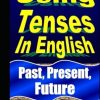
This book covers the following topics: What are “Tenses”? — AGREEMENT between SUBJECT and VERB — TWENTY-FOUR Auxiliary Verbs — REGULAR AND IRREGULAR VERBS — PRESENT TENSE — Present Indefinite Tense — Present Continuous/Progressive Tense — Present Perfect Tense — Present Perfect Continuous/Progressive Tense — PAST TENSE — Past Indefinite Tense — Past Continuous/Progressive Tense — Past Perfect Tense — Past Perfect Continuous/Progressive Tense — FUTURE TENSE — Future Indefinite Tense — Future Continuous/Progressive Tense — Future Perfect Tense — Future Perfect Continuous/Progressive Tense — Useful Notes — Exercises — Sample This: Tenses could be defined as “any of the form of a verb that may be used to show the time of the action or an event or state expressed by the verb”. THERE ARE THREE KINDS OF TENSES: The Past Tense – The form of a verb that usually expresses an action that happened in the past Action happened before present — The Present Tense – The form of a verb that usually expresses an action that happens at this time Action happens in present — The Future Tense – The form of a verb that usually expresses an action that will happen in the future Action will happen after present — EACH OF THESE THREE KINDS OF SENTENCES HAS FOUR TYPES OF FORMS: Indefinite or Simple Form, Continuous or Progressive Form, Perfect Form, Perfect Continuous or Perfect Progressive Form — EACH OF THESE FOUR TYPES OF FORMS HAS FOUR KINDS OF STATEMENTS: Affirmative Statement — Used to Show ‘Agreement’; Negative Statement — Used to Show ‘Disagreement’; Interrogative Statement — Used to Ask ‘Question’; Interrogative-Negative Statement — Used to Ask ‘Question’ and Show ‘Disagreement’ — Present Indefinite Tense – Expresses – Permanent situation in the past, present and future Example: Our family lives in Seattle. — General truth (fact or statement) — Example: Clean water is fundamental to public health. Example: Many barrages have no utility and cause floods. — Habitual action actions that occur regularly — Example: She listens to music every day. — ‘Future meaning’ (timetable, planned event, etc.) — Example: My shop closes at 9 pm. Example: The train arrives at 7:30 pm. — Traditions, rituals, customs — Example: Indians celebrate the festival of light in the month of Oct-Nov. Commands and Instructions Imperative Sentences — Note: In imperatives, subject ‘you’ remains hidden — Example: Condemn perpetrators of terrorism. Example: Promote values of humanity and tolerance. Example: Tell us about the exact nature of your work. — Used in if-clause of present and future real conditional sentences – Example: If I go there, I meet him. Example: If things don’t work out, we won’t be panicked. — Headlines in news reporting Use of simple present tense instead of the simple past tense is common in news headlines – Example: Flight skids on landing at the airport. Example: Thunderstorm brings relief to residents. — (A). AFFIRMATIVE PATTERN – subject + first form of main verb + other words — Singular Verb is used with the subject ‘He and She’ + All Singular Subjects. Plural Verb is used with the subject ‘I, We, You and They’ + All Plural Subjects. Examples: He/She talks. I/We/You/They talk. We seek opportunities to chart out our own course. The lean margin of victory or defeat gives an impression of a tough contest. Nowadays, voters value development over other issues. They want civic amenities and employment opportunities. (B). NEGATIVE PATTERN – subject + auxiliary verb ‘do/does’ + not + first form of main verb + other words – ASIN: | ISBN13: 9798479082740 | ISBN-13: 979-8479082740
You must be logged in to post a review.


Reviews
There are no reviews yet.