
Your bag is empty
Don't miss out on great deals! Start shopping or Sign in to view products added.
Shop What's New Sign in£19.67 Save:£8.00(27%)
Available in stock
| ISBN-10: | 022681839X |
|---|---|
| ISBN-13: | 978-0226818399 |
| Publisher: | University of Chicago Press |
| Publication date: | 17 Nov. 2022 |
| Language: | English |
| Dimensions: | 15.24 x 3.81 x 22.86 cm |
| Print length: | 480 pages |
 Invincible Compendium Volume 2 (INVINCIBLE COMPENDIUM TP)
£35.41
 The New GCSE Arabic Companion (9-1)
£23.75
 Of Mice and Men (New Longman Literature - Plain Edition)
£2.92
 The Red Rising Series Collection 5 Books Set By Pierce Brown (Red Rising, Golden Son, Morning Star, Iron Gold, Dark Age)
£18.67
 Dead Girls Don't Talk - Amazon Exclusive Edition: A YA thriller about a murdered girl, but if you flip over the book you can read from the killer's POV.
£12.54
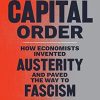
A Financial Times Best Book of the Year “”A must-read, with key lessons for the future.””―Thomas Piketty A groundbreaking examination of austerity’s dark intellectual origins. For more than a century, governments facing financial crisis have resorted to the economic policies of austerity―cuts to wages, fiscal spending, and public benefits―as a path to solvency. While these policies have been successful in appeasing creditors, they’ve had devastating effects on social and economic welfare in countries all over the world. Today, as austerity remains a favored policy among troubled states, an important question remains: What if solvency was never really the goal? In The Capital Order , political economist Clara E. Mattei explores the intellectual origins of austerity to uncover its originating motives: the protection of capital―and indeed capitalism―in times of social upheaval from below. Mattei traces modern austerity to its origins in interwar Britain and Italy, revealing how the threat of working-class power in the years after World War I animated a set of top-down economic policies that elevated owners, smothered workers, and imposed a rigid economic hierarchy across their societies. Where these policies “succeeded,” relatively speaking, was in their enrichment of certain parties, including employers and foreign trade interests, who accumulated power and capital at the expense of labor. Here, Mattei argues, is where the true value of austerity can be observed: its insulation of entrenched privilege and its elimination of all alternatives to capitalism. Drawing on newly uncovered archival material from Britain and Italy, much of it translated for the first time, The Capital Order offers a damning and essential new account of the rise of austerity―and of modern economics―at the levers of contemporary political power. – ASIN: 022681839X | ISBN13: 9780226818399 | ISBN-13: 978-0226818399
You must be logged in to post a review.


Reviews
There are no reviews yet.